
 There are numerous reasons why establishing a leadership mentoring program in your organisation may be one of the smartest things you can do, but here are seven good ones:
1. Attract and retain the best people. Some studies have shown that the presence (or absence) of a mentoring program means more than money to the decision to accept a job offer or remain with an organisation.
2. Modelling teaches more. Many of the core skills, attitudes, behaviours and ethics of leadership are best learnt by modelling rather than in a formal classroom. Mentoring allows your best people to model good leadership and offer practical guidance to your future leaders.
3. Mentoring encourages excellence. Mentoring is exceptional for its capacity to encourage excellence both in mentees and in those who mentor. While it might be expected that mentees might acquire insight and wisdom through working with a good mentor in a mentoring program, experience demonstrates that mentors also gain from the interaction. Mentors frequently explain that their role prompted them to review and reassess their assumptions and clarify their thoughts as they explain things to their mentee.
4. A well set-up leadership mentoring program enables you to recognise and reward your best people. By establishing an appropriate selection process for both mentors and mentees and providing the right framework to support this process you can ensure that participation in your mentoring program is sought by your best people, rather than perceived as a chore or a burden. Don’t take chances with this part of your program set-up as it is one of the critical requirements for its success. If you are not sure how to set things up to ensure best results call me on 03-9859 3924 and I am happy to advise you.
5. Build confidence and self-esteem through personal growth. Mentoring fosters not only professional growth but also personal growth, and can develop confidence in handling new situations, improve understanding of different approaches to a situation and enhance self-esteem for both mentors and mentees.
6. Improve cross-functional or interdepartmental communication and networks. Mentoring relationships are not usually set up between individuals with line management responsibilities. By establishing mentoring relationships between people from different areas of your organisation (or industry) greater understanding and improved cross-functional communication readily follow. Some organisations have found this benefit to be one of the most unanticipated yet valuable company-wide impacts of their whole mentoring program.
7. Foster a culture of contribution. Fundamentally the process of mentoring another always represents a generous gift by a busy person. It is a gift that can typically only ever truly be repaid in kind, over time, when the mentee in turn mentors someone else. As such, mentoring amplifies in its impact by embedding values such as respect, generosity and contribution in the corporate culture. This is arguably the ultimate and most powerful impact any intervention might have.
Check out Books on mentoring and setting up a leadership mentoring program below and in the Bookroom.
An effective leadership mentoring program can achieve all this and more.




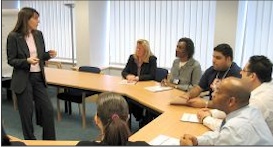


Group Conflict
What to do When Group Dynamics or Group Conflict are a Problem
Once you are promoted to a group leadership role you will find yourself responsible for meeting or group facilitation as a regular part of your role. So it is important you develop the skills required to manage group dynamics and handle any group conflict effectively.
Aside from routine team meetings, there are many other groups you may be called upon to facilitate. Strategic planning workshops, incident debriefs, departmental meetings, external events or conferences and more. So it makes sense to ensure you know enough about group facilitation to decide whether you should do it yourself or bring in external professional facilitators in a given situation.
Although group facilitating might sometimes look easy, for many people the workshop facilitation skills required to achieve a satisfactory outcome can be more of a challenge than anticipated.
As a workshop facilitator, you need to be particularly conscious of group dynamics, including any pre-existing or emerging group conflict, and manage the process and personalities, all while you remain focused on the specific outcomes and results you are trying to achieve. This can be very difficult to do, if you also want to contribute to the discussion.
A good professional facilitator will be acutely aware of the group dynamics, including any potential group conflict, when facilitating a workshop, debriefing session, strategic planning process or meeting.
Here are three critical aspects of group dynamics a meeting facilitator must manage:
Group Conflict
Work group conflict is one aspect of meetings that worries many people, but when it is managed properly by an experienced group facilitator, it can be quite positive.
In fact, groups that suppress differences of style, opinion or approach or never discuss any underlying group conflict, are rarely as successful over the long term as those that accept and even encourage discussion about areas of dissent or group conflict.
When you are exploring long term options in a strategic planning process, different perspectives and disagreements are a healthy part of work communication and should be both encouraged and respected.
If you are bringing in an external facilitator for your meeting or workshop and you expect conflict within the group, you should discuss your concerns with any potential group facilitators in advance. This way you can be confident the professional facilitators you select will incorporate group exercises that ensure all participants have the opportunity to express themselves appropriately.
When conflict persists a skilled meeting facilitator will still be able to build understanding and a level of consensus about the next actions to be taken, despite any group conflict.
Dominant Personalities
Another important aspect of group dynamics to consider is whether there are any dominant personalities in the group who may make it difficult for others to contribute fully to the workshop.
The professional facilitators role in this situation is to ensure everyone participates in all group exercises and discussions, not just dominant, extroverted or senior members of the group.
In some situations it may be necessary to address cultural expectations of who should speak or when someone should speak. Some individuals or cultural groups expect to be asked for their input before they will contribute to discussions and a good facilitator will ensure everyone is explicitly invited to contribute to each key discussion or group exercises during the meeting or workshop.
Assumptions
The final aspect of group dynamics I want to address is that of assumptions. When people work together, or spend a lot of time together, it becomes easy to assume that everyone shares the same point of view or perspective on a whole range of matters, including how people will interact with each other as well as the topic under discussion.
A skilled meeting facilitator will be focused on detecting and questioning assumptions. Common assumptions that may need to be made explicit and addressed revolve around the program agenda and expected outcomes, and about exactly how the workshop will be run.
To facilitate a positive group dynamic and productive group exercises, group agreement should be sought about how things that might otherwise be assumed will be handled. Agreement should be sought about things such as interruptions and phone calls, breaks and punctuality, confidentiality and respect, listening to other participants and even speaking one at a time, for example.
If you decide that the group facilitating role is one you can (or need to) handle yourself, focusing on these three key areas of group dynamics – including group conflict, personalities and assumptions – will help you to gain most from your group leadership role.
Should you decide that you will be more likely to overcome any group conflict issues and achieve your desired outcomes by using an external group facilitator, please call us on 03-9859 3924 to discuss how we can help you with professional meeting facilitation.
Categories: Group dynamics, Strategic planning - Tags: a group leader handling conflict, articles about group conflicts in business, articles on group conflicts in group dynamics, as a facilitator how do you manage your group and handle problems and excisises, as a leader how will you handle if there is conflict of the group, aspects of group dynamics, Bind group conflict, challenges and conflict in group sessions, comment on the role of conflict in groups, conference groups important aspects, conflict and strategic planning, conflict consulting groups, conflict dynamics in group, conflict group, conflict group discussions, conflict group dynamics, conflict in a group, conflict in group dynamics, conflict in groups, Conflict in management in a mentoring group, conflict is a problem in group dynamic, conflict management when facilitating groups, conflict of group, conflict of groups, conflict scenarios in group facilitation, conflict within group meetings, conflicting situation in group dynamics, conflicts and conflicts in group dynamics, conflicts in a group session, conflicts in group dynamics, conflicts with group leadership, confrict in group dynamic, considering precedent in a group conflict, discuss what you would do if there is conflict in a group, dominant personalities, dominant personalities and conflict, effective meetings, elements of group dynamics - conflict, external facilitator in group conflict, external group conflict, facilitating difficult group dynamics, facilitating group conflict, facilitating group conflict discussion, facilitating group conflist, facilitating seminars, facilitation and group dynamics, facilitation exercises group dynamics of less than 8, facilitation group dynamics, facilitation strategies group conflict, facilitator to manage any conflict in group consider communication skills, GROUP CONFLICKS, group conflict, Group conflict and dissent:, group conflict and dynamics, group conflict dynamics, group conflict exercise, Group Conflict Exercises, group conflict in group dynamics, group conflict resources, group conflict results, group conflict what to do when group dynamics of group conflict are a problelm kmg consulting, group conflict what to do when group dynamics or group conflict are a problelm kmg consulting, group conflicts, group dynamic as conflict, group dynamicin meeting, group dynamics, group dynamics activities conflict, group dynamics and conflict, group dynamics and dominating personalities, group dynamics conflict, group dynamics conflict exercises, group dynamics exercises, group dynamics facilatator, group dynamics facilitation, GROUP DYNAMICS FOR CONFLICT EXERCISES, group dynamics group conflict, group dynamics how to handle conflicts in groups, group dynamics in facilitating a group, Group Dynamics in Meetings, group dynamics leadership roles, Group Dynamics members meetings, group dynamics seminars, group dynamics with confict, group dynamics/when is group conflict good, group exercise and conflict style, group exercise assumptions, group exercises facilitating, group faciliation conflict processes, group facilitaion exercises, group facilitation, group facilitation exercises, group facilitator, group leader conflict, group leaders conflict, group leadership, Group Leadership and Conflict Summary, group meeting for conflict, group meetings conflict, group roles conflict, group to group conflict, groupleadership conflict, groups and conflict, groups dynamics facilitation, how a facilitator should manage a situation of conflict in a workshop, how to facilitate a meeting a group in conflict, How to facilitate conflict in a group, how to facilitate group conflict debrief, how to faclitate difficult issues in groups, how to handle group dynamics, how to manage conflic in group dynamic, how to manage conflict within a group facilitation, important aspect of group work for both facilitator and group member, kmg consulting communication conflict, kmgconsulting com conflict, leaders and group conflict, leadership group dynamics, leadership in group dynamics, managing a group facilitation, managing group dynamics in a facilitated meeting, managing group work conflict, meeting about group conflict, meeting facilitation group dynamics, meeting facilitation skills, meetings and group dynamics, meetings group dynamics, planning a difficult meeting conflict, positive group conflict, potenital group conflict, potential group conflict, professional facilitator, reADY MADE FREE session plans for group dynamics, resources group conflict, role of conflict in grou[s, role of conflict in group process, role workshop facilitator, strategic planning exercises groups, strategic planning group dynamics, strategic planning group exercises, STRATEGIES OF GROUP CONFLICT, strategies of group conflict au, strategies to implement when managing conflict as a group facilitator, teambuilding, the conflict group, tips to manage group conflict, tools to manage group conflict, Tools to manage group dynamics, what are elements of group conflict, WHAT ARE THE ASPECTS OF GROUP DYNAMIC, What do you mean by group conflict, What does a professional meeting facilitator do, what is conflict in a group, what is group conflict, what should a facilitator do with disagreements in the groups, what should you do if you encounter group conflict?, WHAT TO DO IN A GROUP CONFLICT PLAN in an organization, what to expect from a strategic planning facilitator, what to expect in group dynamics, why group conflict is good, work conflict speaking at group meetings, working in a group with conflict